Here is a detailed, human-written article about Malaysian food, crafted to feel like a conversation with an experienced food enthusiast.
The Symphony of Spices: Why Malaysian Food Will Rewire Your Taste Buds
I still remember the first time I truly tasted Malaysia. It wasn’t in a fancy restaurant in Kuala Lumpur, but at a sweaty, plastic-table-clothed stall in Penang, a place called “Lorong Selamat.” A man with hands that looked like old leather was wielding a wok over a fire so hot it felt like a dragon’s breath. He tossed flat rice noodles in a dark, caramelized sauce, kicked in a few prawns, a handful of bean sprouts, and cracked an egg right onto the metal. The sound was a sizzle, a hiss, and a promise. That plate of Char Kway Teow wasn’t just dinner; it was a revelation. It was salty, sweet, smoky, and slightly spicy, all at once. It was the moment I understood that Malaysian food isn’t just a cuisine; it’s a philosophy.
That philosophy is campur-campur—a Malay term that means “mix-mix” or a hodgepodge. It’s the idea that the best things in life come from throwing a little bit of everything into the pot. For centuries, this tiny peninsula has been a crossroads for traders, colonizers, and immigrants: the indigenous Malays, the Chinese, the Indians, the Portuguese, the Dutch, and the British. They all brought their pots, pans, and palates, and instead of fighting, they decided to stir them all together. The result is a dizzying, delicious, and deeply human food culture where a single meal can feel like a journey across three continents.
The Alchemy of the Wok: A Crash Course in the Technicals
To understand Malaysian food, you have to understand its core engine: the wok hei. That’s the “breath of the wok” in Cantonese. It’s not just a cooking technique; it’s a spiritual event. It’s that smoky, almost charred flavor you get from stir-frying over a volcano-hot fire. You can’t replicate it on a home stove. I’ve tried. You end up with sad, soggy noodles. The real magic requires a massive, seasoned wok, a furious flame, and a chef who knows exactly when to toss and when to let the noodles rest against the hot metal to kiss that smoky flavor into them.
This isn’t just for a few dishes. The entire structure of the cuisine relies on a few fundamental building blocks:
The Rempah: This is the soul of Malay cooking. Forget powdered curry. Rempah is a freshly ground paste of aromatics like shallots, garlic, ginger, galangal, lemongrass, chilies, and turmeric. It’s the base for everything from a fiery Rendang (a slow-cooked dry curry of beef or chicken) to a soothing Gulai (a coconut milk-based curry). The difference between a good Malaysian curry and a great one is the 45 minutes you spend pounding that rempah with a mortar and pestle, coaxing out the oils and flavors by hand. A food processor is a shortcut, but it’s a shortcut to mediocrity. You lose the texture, the layering of flavors that happens as you slowly break down the fibers.
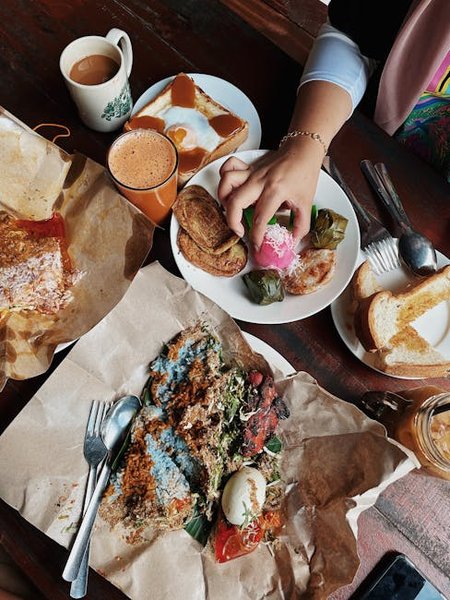
The Trinity of Flavors: Every dish, from the richest Nasi Lemak (coconut rice) to the simplest Nasi Kandar (steamed rice with a selection of curries), plays with three core elements: sweet (gula melaka - palm sugar), salty (shrimp paste or fish sauce), and sour (tamarind, lime, or asam gelugor - a sour fruit). The balance is everything. Too much tamarind in your Penang Assam Laksa (a sour fish noodle soup) and it’s a puckering mess. Too little, and it’s flat. The best hawkers have a sixth sense for this balance, adjusting their seasoning on the fly based on the humidity of the day or the quality of the fish.
The Coconut: It’s not just milk. You have santan (thick coconut milk for richness), air kelapa (coconut water for refreshment), and kerisik (toasted, grated coconut used to thicken and flavor Rendang). I once watched an old lady in a village in Negeri Sembilan toast kerisik over a charcoal fire for two hours. She stirred it constantly, a hypnotic, rhythmic motion, until it turned a deep, nutty brown. That single ingredient transformed her Rendang from a simple stew into a complex, textured masterpiece.
Where the Rubber Meets the Road: Real-World Applications
The beauty of Malaysian food is its radical accessibility. It’s not a restaurant-only affair. It’s a street-level democracy.
The Mamak Stall: This is the social heart of Malaysian life. Run by Indian Muslims, a Mamak stall is open 24 hours a day. It’s where you go for a late-night Roti Canai (a flaky, crispy flatbread) dipped in lentil curry, or a Mee Goreng (spicy fried noodles). It’s where teenagers hang out after school, where businessmen have late-night deals, and where families gather on weekends. I’ve learned more about Malaysian culture sitting on a plastic stool at a Mamak stall, watching the roti man flip dough into thin air, than I ever did in a museum. The key is the dhal (lentil curry). A good Mamak is judged by the quality and complexity of its dhal. It’s a simple dish, but it’s a litmus test.
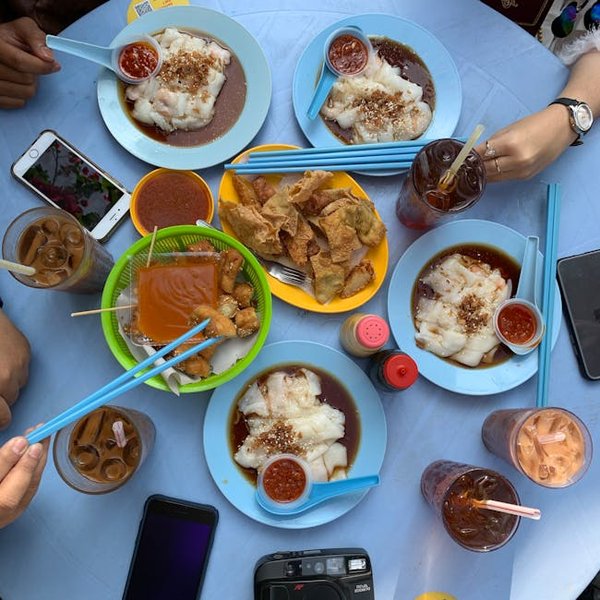
The Kopitiam: This is the Chinese coffee shop. You walk in, find a table, and a server will come to take your drink order (a strong, sweet “Kopi-O” or a “Teh-Tarik” - pulled tea). Then, you walk to different stalls within the shop to order your food. One stall might be for Hainanese Chicken Rice (poached chicken served with fragrant rice and chili-ginger sauce), another for Wonton Mee (noodles with dumplings), and another for Kaya Toast (coconut jam on toast with butter and soft-boiled eggs). This system is brilliant. It allows for hyper-specialization. The chicken rice guy doesn’t have to know how to make a good curry. He just has to make the best damn chicken rice on the street.
A Case Study: The Great Nasi Lemak Debate
Nasi Lemak is the national dish. It’s simple: coconut rice, fried anchovies (ikan bilis), roasted peanuts, a hard-boiled egg, and sambal (a spicy chili paste). You’d think there’s a single, agreed-upon recipe. You would be wrong.
I once got into a heated, hour-long debate with a taxi driver in KL about the sambal. He swore the best sambal was from a stall in Kampung Baru, where they used a specific type of dried shrimp and fried the anchovies until they were almost burnt. My friend in Penang insisted the sambal must be sweet, with a heavy hand of gula melaka. My Malay neighbor in Subang Jaya argued that the true Nasi Lemak is the one you get with sambal sotong (spicy squid sambal) and a piece of fried chicken. They are all correct.
This is the key lesson: Malaysian food is not about a single, canonical recipe. It’s about a style and a feeling. The best Nasi Lemak is the one you grew up with. The sambal from your grandmother’s kitchen is the gold standard. This personalization is a feature, not a bug.
The Good, The Bad, and The Greasy
Let’s be honest. Malaysian food has its downsides.
Advantages:
- Flavor Depth: You will never be bored. The combination of sweet, spicy, sour, and savory in a single bite is a sensory overload in the best way.
- Community: Food is the social glue. Eating is a communal, loud, messy, and joyful affair. You don’t just eat; you share.
- Affordability: A world-class meal can cost you less than $2 USD. The barrier to entry for incredible food is zero.
Disadvantages:
- The Health Factor: Let’s just say it’s not a “clean eating” cuisine. Coconut milk, palm oil, sugar, and deep-frying are the cornerstones. Your arteries will not thank you. You have to approach it with a sense of moderation and a good exercise plan.
- The Heat: The level of spice can be a shock to the system. I’ve seen grown men cry over a bowl of Mee Kolok (a dry noodle dish from Sarawak) that was “medium” spice. The spice isn’t just heat; it’s a complex, floral burn that lingers. You have to build a tolerance.
- The “Mamak” Effect: The 24-hour availability of rich, fried food can lead to some regrettable 3 AM decisions. I once had a Roti Telur (egg roti) with extra cheese and a glass of Milo Dinosaur (a ridiculously thick, iced chocolate malt drink) at 2 AM after a night out. It was delicious in the moment, but I felt like a beached whale for the next 24 hours.
Common Pitfalls of the Malaysian Food Tourist
I’ve seen many travelers make the same mistakes. Here’s how to avoid them:
- Avoiding the “Unknown”: Don’t just order Chicken Rice and Fried Rice. You’re in a country where Paku Pakis (jungle ferns) are stir-fried with belacan (shrimp paste) and Pig’s Organ Soup is a delicacy. Be brave. Point at what the locals are eating.
- Ignoring the Cincalok: This is a fermented shrimp paste condiment from Malacca. It looks like a jar of muddy, funky slop. It smells… challenging. But a tiny spoonful of it, mixed with lime juice, chilies, and shallots, is a flavor bomb that will elevate any simple meal of rice and fried fish. Don’t knock it till you’ve tried it.
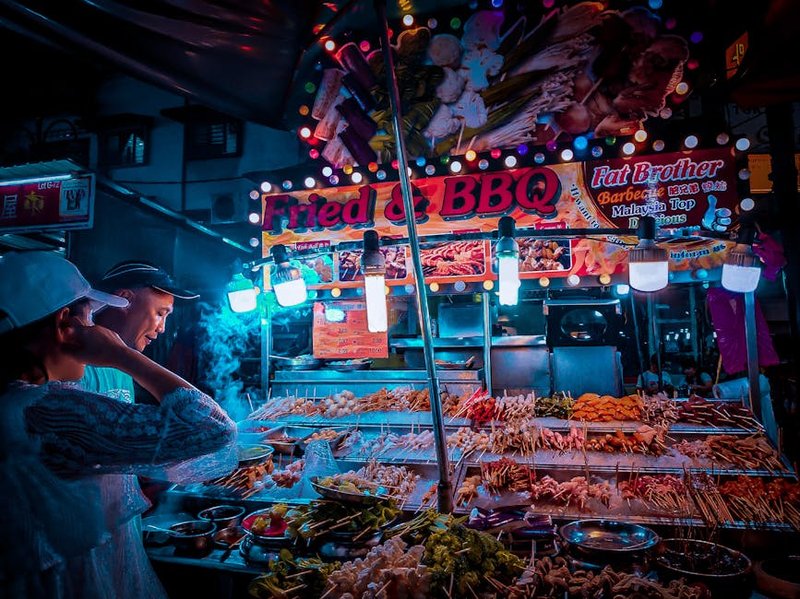
- Eating at the “Tourist” Malls: The food courts in the glittering KLCC mall are fine, but they are a pale imitation of the real thing. You need to find the pasar malam (night market) or a bustling kedai kopi in the suburbs. That’s where the 70-year-old grandmothers are still making the family recipe.
- Forgetting the “Pulling” of the Teh Tarik: The “pulled” tea isn’t just a gimmick. The act of pouring the tea between two cups at arm’s length is what aerates it, creating a frothy, creamy texture and cooling it to the perfect drinking temperature. If you see a stall that doesn’t pull the tea, walk away.
What I’ve Learned from the Wok
My biggest lesson came from a failed attempt to make Rendang at home. I had a good recipe, good ingredients, even a decent rempah. I followed the instructions to the letter. It was… fine. But it wasn’t the Rendang from that village in Negeri Sembilan. It was a ghost of the real thing.
The old lady who made the kerisik taught me the secret. She said, “You must stir with love. You must listen to the sound of the coconut milk separating. You must feel the steam. You cannot rush the Rendang. It will take its time, and you must give it yours.”
That’s the truth. Malaysian food demands patience. It demands a connection to the process. It’s not about speed or efficiency. It’s about coaxing flavor out of humble ingredients through time and attention. The best practices for cooking Rendang are not about the ingredients; they are about the mindset.
The Future: A Wok in a World of Sushi
There’s a quiet revolution happening. A new generation of Malaysian chefs, trained in fine-dining kitchens in London and Sydney, are coming home. They are taking the flavors of their grandmothers—the rempah, the belacan, the cincalok—and applying modern techniques. You’re starting to see Laksa foam, Rendang ravioli, and Cendol (a shaved ice dessert with green jelly noodles and coconut milk) deconstructed into elegant plated desserts.
It’s exciting, but I worry. The soul of Malaysian food is in the chaos of the street. It’s in the smoke, the sweat, and the sizzle. You can’t deconstruct the energy of a Mamak stall at 2 AM. You can’t capture the wok hei in a laboratory. The best future for Malaysian food isn’t just Michelin stars; it’s ensuring that the next generation of hawkers can afford to keep their stalls, that the recipes are passed down, and that the plastic chairs and the dragon-fire woks remain on the street corners.
The Final Bite
If you’ve never had Malaysian food, you are missing one of the great culinary experiences of the world. It’s not for the faint of heart. It’s loud, messy, spicy, and often inexplicable. It’s a cuisine that doesn’t ask you to appreciate it from a distance. It grabs you by the collar, shoves a spoonful of Sambal Petai (stink beans cooked in chili) in your mouth, and dares you to love it.
And you will. Because underneath the fiery chilies and the heavy coconut milk, there’s a profound warmth. It’s the warmth of a culture that has spent centuries learning how to share a table. So, find your nearest pasar malam. Point at something that looks weird. Eat it with your hands. And when the flavors hit you—all at once, a chaotic symphony of sweet, sour, salt, and spice—just smile. You’re eating Malaysia. And Malaysia is delicious.